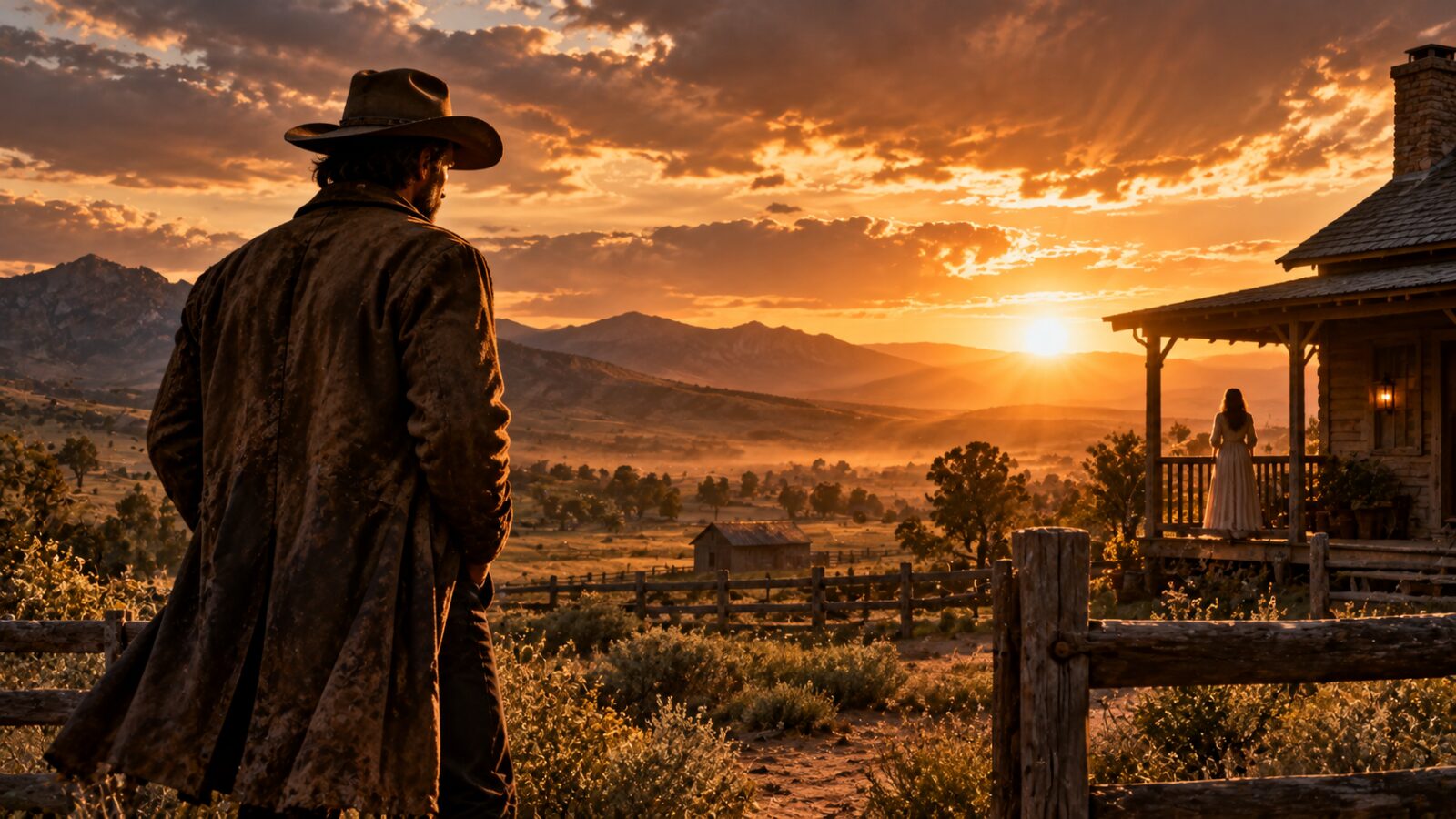
Angel and the Badman (2026) revisits a classic Western premise: a wounded outlaw arrives at a ranch expecting to die, but the people who offer him shelter give him a reason to consider a different life. Directed by Julio Quintana and led by Zachary Levi as Quirt Evans, the remake places redemption, faith and the consequences of violence at the centre of its story. Meg Fraser plays Penny, with Neal McDonough and Tommy Lee Jones among the supporting cast. Released in US theaters on October 9, the film has received a divided critical response, with some reviewers appreciating its traditional Western values and others finding its approach predictable or overly earnest. This source-based review analyses the premise, performances, remake choices and early critical reaction.
Angel and the Badman: at a glance
- US release: October 9, 2026
- Director: Julio Quintana
- Genre: Western / drama / romance
- Runtime: Approximately 1 hour 38 minutes in the official listing
- Cast: Zachary Levi, Meg Fraser, Neal McDonough, Jean Louisa Kelly and Tommy Lee Jones
- Distributor: Angel Studios
- Story: A wounded outlaw is offered shelter and a chance to leave violence behind
See the official Angel Studios film page for the current synopsis and credits.
The Western redemption premise
Quirt Evans is introduced as a feared outlaw whose life takes an unexpected turn when he is injured and found near a ranch. Rather than treating him only as a threat, Penny and her family offer care and a chance to recover. The central conflict is familiar to Western storytelling: can someone who has built a life around violence choose a different future, and what happens when the past refuses to let go?
The premise gives the film a clear moral and dramatic direction. Quirt is not simply deciding whether to remain at a ranch; he must decide what kind of person he wants to become when old loyalties and new responsibilities pull him in different directions. The marshal’s pursuit and the danger posed by an outlaw gang create external pressure, while the possibility of a peaceful life creates an internal conflict. The story works best when these sides affect one another instead of feeling like separate plot tracks.
Redemption stories can be powerful because change is difficult, especially when the consequences of past decisions do not disappear. They become less convincing if a character’s transformation arrives too easily or if other people are expected to forgive without seeing evidence of change. The remake’s challenge is to make Quirt’s choices feel earned through behaviour, not merely through a declaration that he wants to be better.
Revisiting the 1947 original
The title recalls the 1947 Western starring John Wayne and Gail Russell. That earlier film established a contrast between a hard-edged gunman and the woman who offers him a different way of living. The 2026 version adapts the same basic material for a modern audience and places a clear emphasis on faith and moral renewal. Remaking a familiar story creates both an opportunity and a burden: viewers recognise the framework, but the new version needs to justify its existence through distinctive performances, fresh details or a meaningful shift in emphasis.
A remake does not need to reproduce every scene from an earlier film. It can change pacing, character dynamics or the cultural context around the story. The important question is whether those changes make the central conflict more compelling. If the new film follows the old blueprint too closely, viewers may anticipate each turn well before it arrives. If it changes too much without deepening the characters, the familiar title may feel disconnected from the story being told.
Several critics have compared the remake unfavourably with the original, especially around the chemistry between the leads and the balance between romance and moral instruction. Those are subjective judgements, but they point to a central challenge: a Western romance depends on more than the idea that two characters represent opposing ways of life. Their connection must feel specific, and the audience needs to understand what each person sees in the other.
Zachary Levi as Quirt Evans
Zachary Levi plays Quirt, a character whose public reputation and private choices are in conflict. The role requires a shift from an intimidating outlaw to someone capable of considering responsibility, affection and restraint. A performer can make that transformation persuasive by showing gradual changes in how the character listens, reacts and treats people, rather than relying only on a softer tone or a single emotional conversation.
Early critical response has been mixed on Levi’s fit for the part. Some reviews argue that he does not bring the same presence associated with John Wayne’s version, while other audience responses have been more receptive to the straightforward, old-fashioned style.
The character’s moral journey also needs credible resistance. If the audience sees only the outlaw’s worst side at the beginning and a complete transformation by the end, the story can feel mechanical. The more interesting version allows Quirt to struggle with habits, pride and the consequences of his choices. A redemption narrative becomes more than a slogan when the character must make difficult decisions after discovering what a better life could look like.
Penny and the supporting cast
Meg Fraser plays Penny, whose decision to help Quirt sets the story in motion. Penny needs to be more than a symbol of innocence or a reward for the outlaw’s improvement. Her compassion is central to the premise, but a fully realised character should also have boundaries, fears and reasons for making her choices. The romance is more convincing when the two characters influence one another, rather than one person existing solely to redeem the other.
Neal McDonough and Tommy Lee Jones bring familiar screen presence to the supporting cast, while Jean Louisa Kelly also appears in the film. Supporting performances can help the ranch feel like a community with its own values and tensions. In a story about the consequences of violence, the people around Quirt should not be reduced to background figures: they are the ones who may have to live with the risk of trusting him.
Some early reviews have praised individual supporting performers while criticising the overall chemistry or pacing. The cast can deliver solid moments, but the film still needs relationships that develop naturally across the runtime. A convincing ensemble gives the central choice emotional weight because the audience understands what Quirt’s change would mean to the people around him.
Faith, romance and the Western tone
Angel and the Badman is presented as a faith-oriented Western, and that identity shapes how it treats redemption. The film is interested in the possibility that a person can move beyond violence through mercy, community and a renewed moral direction. Viewers who appreciate stories with a clear ethical centre may find that approach appealing. Others may prefer a more ambiguous Western in which the characters’ decisions remain complicated and the film avoids explaining its message too directly.
A faith-centred story does not automatically lack complexity. The challenge is to make moral ideas part of the characters’ lived experience rather than simply stating them in dialogue. A character’s decision to change should have visible consequences, and the people offering forgiveness should have agency in deciding whether trust can be rebuilt. When the screenplay makes every turn predictable, the story may feel more like a lesson than a drama.
The Western setting offers visual and thematic possibilities. Open landscapes can emphasise isolation, while the ranch can represent a fragile alternative to a life of conflict. The marshal and the outlaw gang create pressure from outside, but the film’s emotional centre is the decision about how to live. Strong Western storytelling uses that contrast to make the landscape, action and moral choices feel like parts of the same world.
What early reviews say
Early critics have been largely negative, although audience reactions have been more varied. Rotten Tomatoes’ listing showed a 23% critics score from 13 reviews and a 75% audience score from more than 50 verified ratings at the time of research. These figures can change as new reviews and audience ratings arrive, and they measure different groups. The split suggests that the film’s traditional approach may work better for some viewers than for critics looking for a fresh take on the original.
Variety’s review criticised the remake’s lack of spark compared with the 1947 film, while Slug Magazine was much harsher about the script and its approach. Other reviewers have described it as a modest, familiar Western that may appeal to audiences who want a straightforward story. Taken together, the responses point to the same questions: does the film make its central relationship believable, does the redemption arc feel earned, and does the remake offer enough of its own perspective?
These published reactions are useful context, but a score alone cannot tell a viewer whether the film suits their taste. Someone who enjoys clearly drawn moral conflict may respond differently from a viewer who wants complicated characters and a less predictable plot. This article is a source-based review, not a claim of personal viewing, so the linked reviews remain the best way to compare specific critical arguments.
Review verdict: a familiar Western with a clear moral focus
Angel and the Badman (2026) has a straightforward premise built around mercy, personal responsibility and the possibility of leaving a violent past behind. Its familiar Western setting and faith-oriented outlook give it a clear identity, while the cast brings recognisable performers to the story. Early critical response, however, suggests that the remake struggles to create the chemistry and freshness that might make its familiar framework feel newly urgent.
Viewers who enjoy traditional Westerns and stories with an explicit redemption theme may still find elements to appreciate. Those looking for a radical reinvention of the 1947 film may be less satisfied, particularly given criticism of the predictable plot and lead dynamic. This is a source-based critical analysis rather than a personal rating after a screening; readers should compare the official synopsis with linked reviews before deciding whether it fits their interests.
Angel and the Badman (2026): frequently asked questions
Who directed Angel and the Badman?
Julio Quintana directed the 2026 remake.
Who stars in the film?
The cast includes Zachary Levi, Meg Fraser, Neal McDonough, Jean Louisa Kelly and Tommy Lee Jones.
What is the movie about?
A wounded outlaw named Quirt Evans receives help from a ranch family and must decide whether to abandon his violent past.
When did it release?
Angel Studios lists October 9, 2026 as its US theatrical release date.
Is it a remake of the 1947 film?
Yes. It revisits the Western story associated with the 1947 film starring John Wayne and Gail Russell.
What genre is the 2026 version?
It combines Western, drama, romance and action-adventure elements, with an emphasis on redemption and faith.
What have critics said?
Early reviews have been mostly negative, especially about predictability and chemistry, while some audience responses are more positive.
Is this a first-hand review?
No. This is a source-based analysis using the official listing and published reviews.
Where can I read more?
See the official Angel Studios page, Rotten Tomatoes reviews and Slug Magazine’s review.
Sources and further reading
- Angel Studios — official synopsis and credits
- Rotten Tomatoes — critics and audience response
- Slug Magazine — published review
- RunPee — published review