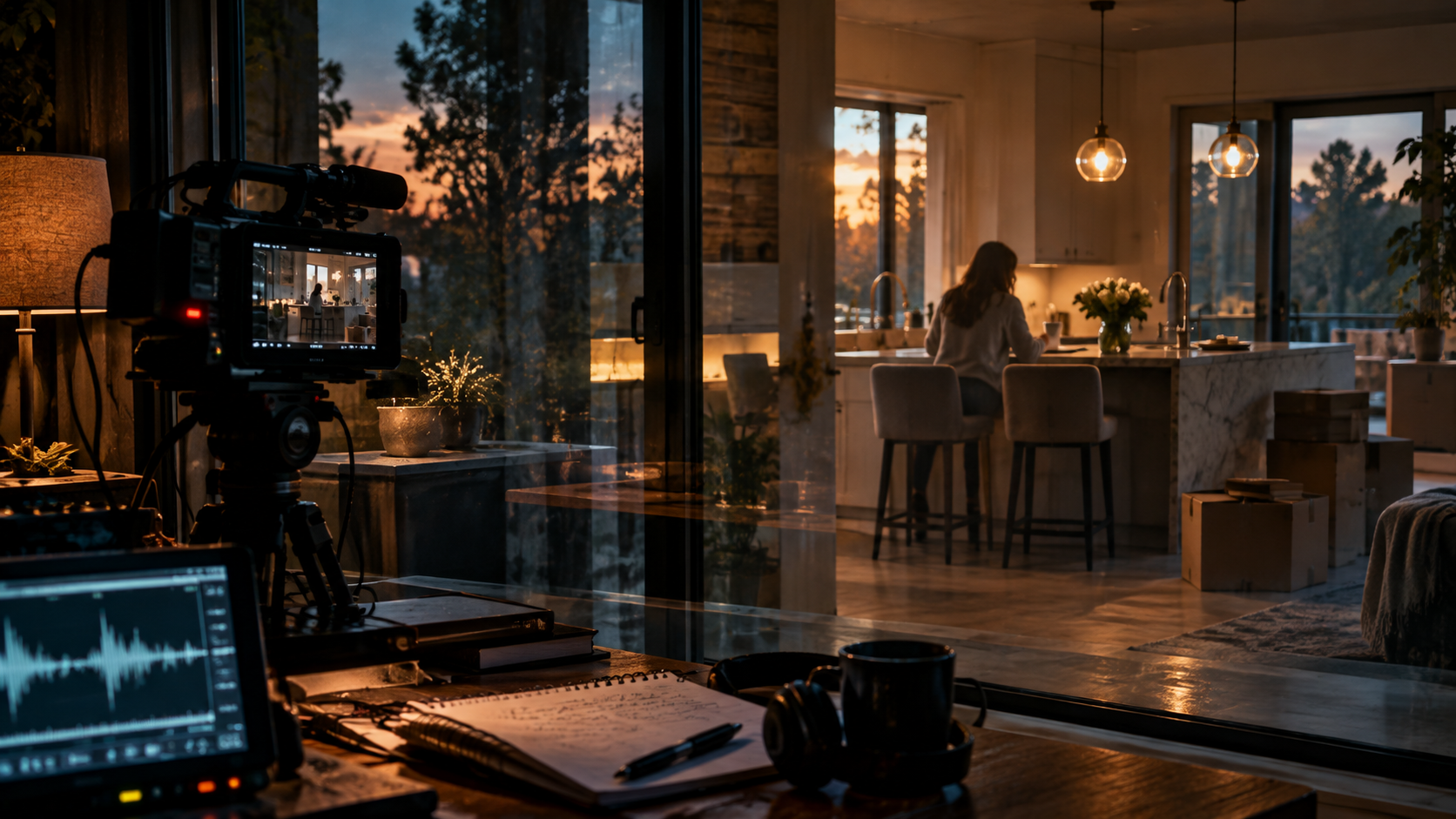
You Can See Everything (2026), directed by Nathan Fielder and Lance Oppenheim, is a documentary about Elizabeth Holmes, the former Theranos founder whose criminal fraud convictions became a major story about startup culture, medical technology and investor trust. The film begins with a striking access arrangement: shortly before Holmes was due to begin serving her sentence, she invited a film crew to document her daily life. What began as an intimate portrait developed into a multi-year project that raises difficult questions about performance, truth and how people try to control their public image. This source-based review analysis examines the film’s method, its ethical challenges and the early critical response ahead of its October 16, 2026 release.
You Can See Everything: at a glance
- Release: October 16, 2026 in US theaters
- Genre: Documentary
- Directors: Nathan Fielder and Lance Oppenheim
- Subject: Elizabeth Holmes and the period before her imprisonment
- Distributor: A24
- Format: Intimate documentary access with a deliberately self-conscious approach
See the official A24 page for the synopsis and release information.
The documentary’s unusual starting point
A24’s official synopsis says that, 34 days before she was due to be sent to prison, Holmes invited a skeptical film crew to document her life. The project then grew into a longer, multi-year journey. That starting point creates an unusual dynamic: the subject is aware of the camera, yet the directors are not simply making a promotional portrait. The film’s central tension appears to come from the gap between access and understanding. Being allowed into a person’s home does not guarantee that the person’s motives, beliefs or relationships become easy to interpret.
The Theranos case already has a public record involving investor fraud and claims about a blood-testing technology that did not perform as represented. The documentary therefore arrives after years of reporting, court proceedings and public debate. It does not need to introduce Holmes as an unknown figure; instead, it asks what can be learned by observing her in a more intimate context after the case has become widely known.
That is a difficult task. A documentary about a controversial public figure can easily become a verdict delivered through editing. A more intriguing film lets the audience observe behaviour, notice contradictions and consider why a person presents a certain version of events. The value lies not simply in revealing private details, but in showing how self-image, public accountability and personal narrative interact.
Access does not automatically equal truth
Documentary filmmakers often seek access that other reporters cannot obtain. Being present in a private home can offer ordinary moments, pauses and conversations that a formal interview rarely produces. But access also creates risks. A subject may control where cameras can go, which conversations take place and how much of their life remains unavailable. The crew must decide whether the access is revealing something meaningful or giving the subject a new way to shape the story.
Published reporting says Holmes and her partner Billy Evans had not watched the completed documentary ahead of its release, and that communication between them and the filmmakers deteriorated during production. That background is relevant because it shows that the relationship between subject and crew was not necessarily a simple arrangement in which everyone agreed about the purpose of filming. It also reminds audiences that documentary access can change as the project evolves.
Truth, performance and self-presentation
Holmes became known for a carefully controlled public persona during Theranos’s rise. The broader story concerns more than one individual: it also involves the culture of startup investment, the authority granted to charismatic founders and the difficulty of evaluating technical claims when outsiders lack access to the underlying evidence. A documentary that follows her daily life can ask how a person understands herself after a public collapse, and whether private behaviour confirms or complicates the image that previously reached investors and audiences.
There is a difference between a subject’s self-understanding and the public record. People can sincerely believe their own explanations while still being responsible for actions that harmed others. A film can explore this tension without assuming it knows every private thought. Viewers should distinguish what the camera records, what a subject says about those events and what the filmmakers infer from them.
That distinction is especially important when the story involves a criminal conviction. Documentaries can invite empathy or curiosity without removing accountability. Understanding how someone tells their own story is not the same thing as accepting that story as true. The most useful viewing approach is to ask what evidence supports a statement, what context is absent and whether the film makes room for perspectives beyond the central subject.
Documentary ethics and the problem of intimacy
Close access can make a film feel unusually honest, but intimacy is not proof of completeness. The camera may capture small domestic details, awkward pauses or private conversations, yet those moments still pass through editing and presentation. An audience can become fascinated by the feeling of being present in a room and forget that the final film is a deliberate construction.
You Can See Everything has been described by early critics as both an intimate portrait and a film that makes viewers question what they are seeing. That tension can be a strength if the documentary encourages the audience to think about the limits of observation. It can also be frustrating if the film leaves too many questions unresolved without explaining why the uncertainty matters. The line between a productive mystery and an unclear argument often depends on whether the filmmaker acknowledges the limits of their own access.
Ethical documentary practice also includes the treatment of other people who appear in a story. Their words and actions may be framed in relation to the central figure, even when their own perspective is more complicated. Viewers should remember that people captured in a documentary are not simply characters who exist to support the director’s thesis. The strongest non-fiction films preserve room for contradiction and avoid turning every person into a symbol.
Nathan Fielder and Lance Oppenheim’s approach
Nathan Fielder is known for work that blurs the boundary between ordinary behaviour and carefully constructed situations, while Lance Oppenheim’s documentary work often pays close attention to visual framing and the worlds people build around themselves. Their collaboration gives You Can See Everything a distinctive premise: the film is about a person who became a symbol of a public scandal, but it also invites questions about the filmmakers’ choices and their own relationship with the camera.
That self-awareness can make the documentary more than a conventional biography. Rather than simply arranging milestones in chronological order, the directors can use the filming process itself to examine how people perform for an audience. The crew’s presence changes the situation they are documenting; the subject’s responses influence what gets recorded; and the eventual edit changes how viewers interpret those moments. The documentary’s form becomes part of its subject.
The challenge is maintaining clarity. A film can be deliberately unsettling while still giving the audience enough factual context to understand the central stakes. If the style overwhelms the record, viewers may come away remembering the experience without a clear understanding of the events that made the subject important. An effective documentary balances experiment with enough grounding in facts to let the audience make informed judgements.
What early critical response highlights
Published festival reviews have been strongly engaged by the film’s unusual method. The Guardian described it as an unsettling and ambitious documentary about identity, deception and the performance of truth. RogerEbert.com’s review likewise focused on how the film uses its access to create a story that is difficult to reduce to a conventional biography. Those reviews suggest that the documentary’s method—not simply the subject’s notoriety—is central to its appeal.
Critical praise does not mean the film should be accepted without question. Reviewers can admire an experiment while still disagreeing about what it proves. Since the documentary centres on a real person and a case that affected investors and others, viewers may want to compare the film’s choices with established reporting and public records. A documentary can be artistically daring and still leave factual or ethical questions worth discussing.
Who should consider watching You Can See Everything?
The documentary may appeal to viewers interested in investigative non-fiction, technology scandals, media ethics and films that question their own methods. It is also likely to interest people who followed the Theranos case and want to understand how the story is being interpreted through intimate documentary access. The unusual format may be less appealing to viewers who prefer a straightforward timeline or a simple explanation of the legal case.
Because the film is built around a controversial public figure, it is useful to approach it with both curiosity and caution. A strong documentary can deepen understanding, but it does not replace original reporting or court records. Readers who are new to the subject may wish to start with a factual overview of the Theranos case, then consider how the film’s editing and access shape its particular portrait.
Review-analysis verdict: intimacy that raises its own questions
You Can See Everything has a distinctive setup: a film crew is given access to a public figure shortly before imprisonment, and the resulting project becomes an extended study of how truth and self-presentation can diverge. Its most interesting question is not simply what viewers learn about Holmes, but how documentary filmmaking turns observation into a story and where the limits of that process remain.
Early reviews suggest a formally unusual and provocative documentary, though the most responsible response is to assess its claims alongside the wider public record. This article is a source-based review analysis, not a claim of personal viewing. For readers interested in media ethics and the culture surrounding technology founders, the film provides a timely subject for discussion, while its methods invite viewers to question how much a camera can really reveal.
You Can See Everything (2026): common questions
What is You Can See Everything about?
It follows a documentary crew’s access to Elizabeth Holmes shortly before she was due to begin serving her sentence, then expands into a longer study of identity and self-presentation.
Who directed the documentary?
Nathan Fielder and Lance Oppenheim directed the film.
When does You Can See Everything release?
A24 lists October 16, 2026 for its US theatrical release.
Is the documentary about the Theranos scandal?
It focuses on Holmes after the public Theranos case, using intimate access to explore how she presents herself and how the filmmakers interpret that access.
Have Elizabeth Holmes and Billy Evans seen the film?
Published reporting ahead of release said neither had watched the completed documentary at that point.
Is this a traditional biography?
No. Early reviews describe an experimental, self-aware documentary that draws attention to the filming relationship as well as the subject.
What themes does the film explore?
Its themes include truth, performance, public image, accountability, documentary access and the limits of observation.
What have critics said?
Early festival reviews have praised its unusual method and unsettling intimacy, while also inviting debate about what the film can establish.
Where can I find the official synopsis?
Visit the official A24 film page.
Is this a first-hand review?
No. This is a review analysis based on official information and published festival reviews, not a claim that the writer personally watched the film.
Sources and further reading
- A24 — official synopsis and release date
- RogerEbert.com — festival review
- The Guardian — published review
- The Washington Post — early takeaways