Other Mommy (2026) arrived with a premise built for uneasy questions: what happens when a familiar home stops feeling safe, and the thing that frightens a family looks almost ordinary? The supernatural horror release has drawn attention beyond its reviews, opening at the top of the North American box office in the October 9–11 weekend. Yet a strong opening and a promising horror concept do not automatically mean a story fully delivers. This spoiler-light review analysis looks at the film’s idea, creative choices described in public materials, early critical response and the reasons genre fans may feel differently about it.
Other Mommy: At a glance
- Release: October 9, 2026 in the United States
- Genre: Supernatural horror
- Director: Rob Savage
- Screenplay: Nathan Elston
- Based on: Josh Malerman’s novel Incidents Around the House
- Key cast: Jessica Chastain, Jay Duplass and Arabella Olivia Clark
- Production context: Blumhouse / Atomic Monster and Universal Pictures
For current release details, see the official Universal Pictures synopsis.
A familiar home becomes the source of fear
The central idea behind Other Mommy works because domestic spaces already carry emotional meaning. A hallway, a bedroom door or a quiet conversation can feel harmless in daylight and uncomfortable after dark. Horror often gains more from changing the meaning of an ordinary object than from showing something frightening every minute. In this story, a child encounters a disturbing presence connected to the appearance of her mother, turning the idea of comfort and trust into a source of uncertainty.
The film also has a literary foundation. It adapts Josh Malerman’s Incidents Around the House, a novel that plays with fear from a child’s perspective. Translating a book’s internal unease to the screen is a real challenge: prose can describe what a character senses, while cinema must express that uncertainty through performance, sound, framing and editing. A successful adaptation needs to preserve that uncertainty without leaving viewers confused about what matters.
What the concept offers horror fans
The strongest feature of a doppelgänger premise is not simply that a character looks like someone else. The deeper disturbance comes from recognition without trust: a familiar face no longer guarantees a familiar person. That idea gives a director many ways to create tension without explaining everything immediately. If a film allows small changes in behaviour, timing and atmosphere to accumulate, the audience can participate in the suspense by noticing details before they are explained.
Other Mommy’s public marketing emphasised an intimate supernatural threat rather than a remote monster or a large-scale disaster. That can make a horror film easier to relate to because the danger is tied to family life and ordinary routines. It can also create a high expectation. When a trailer presents an intriguing question, viewers naturally hope the finished story will develop the question instead of repeating the same scare in different locations. The challenge is to turn an effective hook into a whole film with clear emotional stakes.
Performances and character relationships
Jessica Chastain leads the film in a role that involves an uneasy split between the ordinary and the uncanny. The public synopsis confirms her central role, while early reviews have often treated the performance as one of the film’s more effective elements. That is an important distinction: an actor can provide emotional credibility even when the script does not give the character enough consistent choices. A strong horror performance needs more than frightened reactions; it also has to establish what the character wants, what they are prepared to risk and how the fear changes their relationships.
The family perspective matters because the story’s tension depends on whether the audience understands why people behave as they do. If a character is frightened but still has believable reasons to delay, doubt or investigate, suspense can grow naturally. If decisions seem to exist only to move the plot toward another scare, the viewer may stop worrying about the characters and start questioning the screenplay. Published criticism of Other Mommy has raised concerns about its storytelling and consistency, so character motivation is one of the main things a prospective viewer may want to consider.
Atmosphere, sound and jump scares
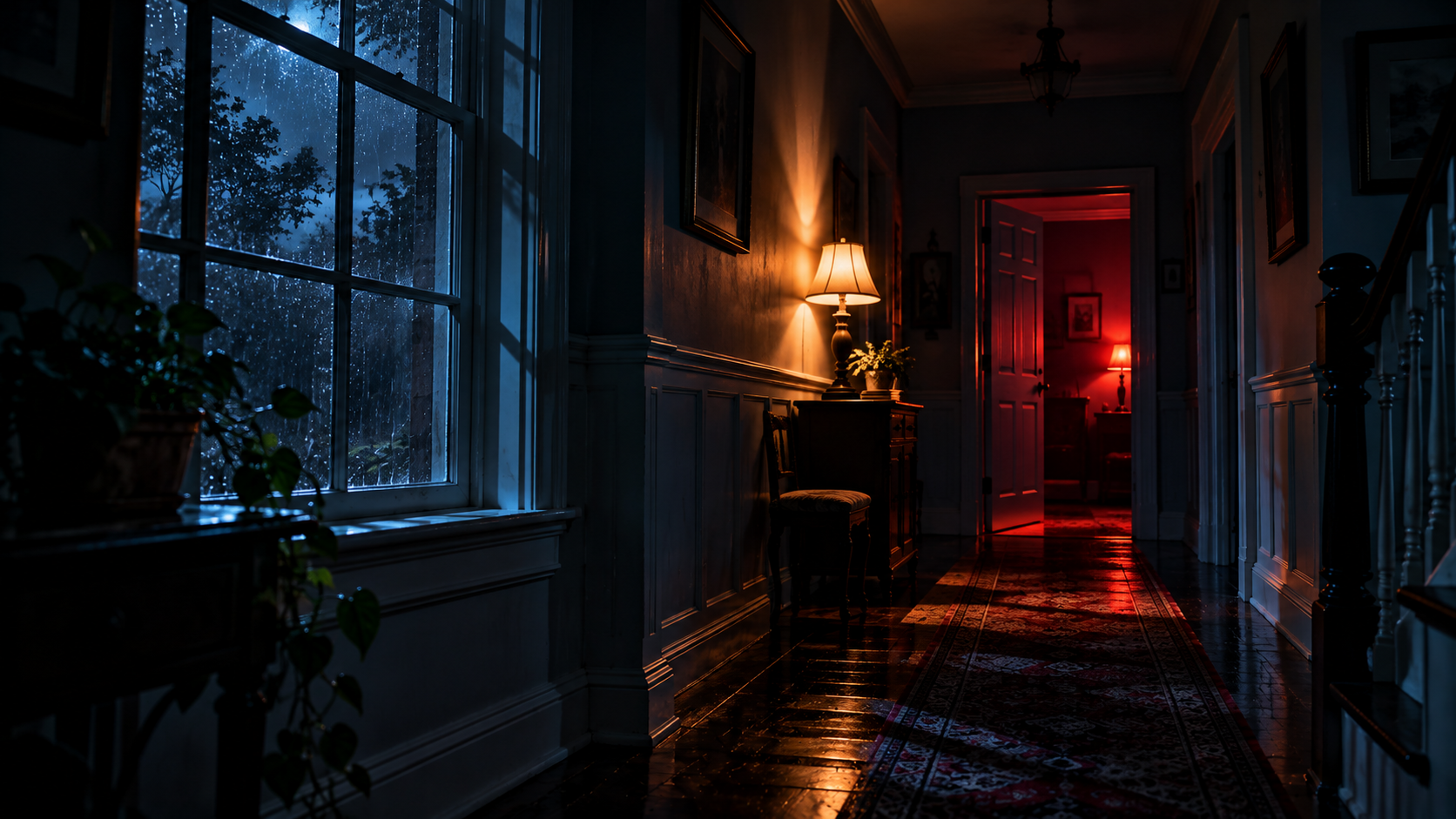
Sound design is especially important in a film where a familiar setting becomes unsettling. A quiet room can feel threatening when a background noise is slightly unexpected; silence can be just as effective as a sudden loud cue. Lighting and framing can make a doorway or an empty patch of a room feel loaded with possibility. These tools work best when they help a scene build a question, rather than simply announcing that the next scare is about to arrive.
Early published reviews have been critical of the film’s balance between genuine tension and frequent jump scares. That criticism points to a broader issue in contemporary supernatural horror: quantity is not the same as impact. A jump scare can be effective when it follows a carefully constructed build-up, reveals something meaningful or changes the story’s direction. When scare moments arrive too frequently, the audience may become trained to expect the pattern. The tension can flatten instead of becoming stronger.
This does not mean jump scares are inherently weak. They are a legitimate part of the genre and can work well for a theatrical crowd. The question is whether the film gives those moments context. Psychological horror often stays with viewers because a threatening image or idea continues to trouble them after the scene ends. A string of shocks may create immediate reaction without leaving the same lasting impression.
Story structure: mystery needs rules
A supernatural story does not need to explain every detail. Some uncertainty can make an experience more memorable, particularly when the central threat is supposed to feel beyond normal understanding. But uncertainty and incoherence are different things. Viewers can accept that a character does not understand an entity while still needing the film to follow its own emotional and dramatic logic. If the threat behaves differently from scene to scene without a meaningful reason, suspense may turn into frustration.
Some early criticism of Other Mommy describes the narrative as uneven and the character decisions as difficult to follow. That does not mean every audience member will reach the same conclusion, but it identifies a useful question for a viewer: does the mystery become more interesting as it develops, or does it feel like separate scare sequences stitched together? The strongest answer would connect the supernatural idea to the family’s emotional reality and allow major decisions to grow from what the audience has learned.
The family drama underneath the horror
The film’s most interesting possibility is the connection between supernatural fear and everyday vulnerability. A story about a threatening imitation of a loved one can raise questions about trust, attention, separation and the fear of not truly knowing someone. Those themes are relevant to a family story because children and adults may interpret the same event in different ways. A thoughtful script could use that gap to make the supernatural idea both frightening and emotionally grounded.
The problem, according to the critical response reported so far, is that these possibilities may not receive as much space as the more conventional horror machinery. When a film hints at a meaningful emotional conflict but rushes past it, viewers can feel that an opportunity has been missed. Genre fans do not necessarily need a horror movie to become a family drama. They do need a clear connection between the character stakes and the scares. A successful blend can make the frightening moments feel consequential rather than interchangeable.
Why Other Mommy is attracting attention
The commercial story is notable because the film opened above expectations despite a rough critical reception. Associated press reporting published on October 11 estimated a $27.5 million North American debut, while international sales brought its opening total to roughly $45.2 million. These are early box-office estimates, not a measure of artistic quality or a guarantee of the final result. They do show that the premise, trailer campaign, genre season and audience appetite combined to attract a substantial opening crowd.
The contrast between ticket sales and critical response is worth understanding. Horror often offers a clear theatrical promise: a shared experience built around suspense, surprise and strong atmosphere. A film can attract viewers through an instantly understandable concept even when critics later question its execution. That does not mean audiences are wrong or critics are right. It means marketing, genre interest, critical judgement and personal enjoyment measure different things.
As more audience reactions appear, the conversation may shift. Some viewers enjoy fast-moving horror with frequent shocks; others want a more carefully developed mystery. A current box-office result captures one moment in a film’s release, while long-term reputation depends on what people remember, recommend and revisit. The best way to read the numbers is as evidence of attention—not as a substitute for discussing the film itself.
Who might enjoy it?
Horror fans who like supernatural premises, eerie domestic settings and family-centred suspense may find the basic idea appealing. Viewers who prefer slow-burn dread, consistent world-building and tightly motivated characters may want to pay attention to the mixed early reviews before choosing a cinema ticket. Those who enjoy energetic jump-scare horror may respond more positively than people who prefer atmosphere and psychological ambiguity.
The film also raises a practical viewing question: do you prefer a horror story that explains the rules of its threat, or one that deliberately leaves much unexplained? Either preference is reasonable, but the answer affects enjoyment. A movie can be a suitable weekend choice for one group and an unsatisfying experience for another. That is why a useful review should explain its criteria instead of claiming that a single verdict applies to everybody.
Verdict: a strong horror hook with a debated payoff
Other Mommy has a memorable supernatural premise, an experienced lead performer and the kind of intimate setting that can make horror feel close to home. Its opening weekend demonstrates substantial curiosity from audiences. At the same time, early critical coverage has questioned the coherence of the plot and whether repeated shocks deliver the psychological unease promised by the premise. The gap between a strong concept and an uneven execution is the central theme of the current discussion.
For readers deciding whether to watch it, the most honest recommendation is conditional: consider it if the premise and current horror wave appeal to you, but go in expecting a film whose critical reception is mixed rather than a universally praised new classic. A movie’s box-office opening can tell you that people were interested enough to buy tickets; it cannot promise that the finished experience will work for your tastes.
Other Mommy review: common questions
What is Other Mommy about?
It is a supernatural horror story about a child who encounters a sinister presence connected to the appearance of her mother. The story adapts Josh Malerman’s novel Incidents Around the House.
When did Other Mommy release?
Universal’s US theatrical release date was October 9, 2026. Release timing can differ by country, so check official local cinema listings for your region.
Who directed Other Mommy?
Rob Savage directed the film from a screenplay by Nathan Elston. The official studio page provides the current credits and synopsis.
Who stars in Other Mommy?
The principal cast includes Jessica Chastain, Jay Duplass and Arabella Olivia Clark, with a wider supporting cast listed in Universal’s official materials.
Is Other Mommy based on a book?
Yes. The film is based on Josh Malerman’s novel Incidents Around the House, a supernatural horror story.
Is Other Mommy worth watching?
That depends on taste. Its horror premise and atmosphere may interest genre fans, while published early criticism has raised concerns about narrative consistency and overuse of jump scares.
How much did Other Mommy earn on opening weekend?
Associated Press reporting on October 11, 2026 estimated about $27.5 million in North America and roughly $45.2 million worldwide for the opening weekend. Early figures may be revised.
Is Other Mommy streaming yet?
Streaming availability can change and varies by country. Check the official distributor and local streaming catalogues rather than relying on a predicted online date.
Does this review include spoilers?
The article is designed to be spoiler-light and focuses on the premise, creative approach, critical response and release context rather than revealing major plot turns.
Where can I check official details?
Start with Universal Pictures’ official synopsis and compare it with published reporting such as Associated Press reporting carried by The Washington Post and The Guardian’s review.
Official information and further reading
- Universal Pictures — Other Mommy synopsis
- NBCUniversal — theatrical release and cast details
- The Guardian — early critical response
- Associated Press reporting — opening-weekend estimates