Primetime (2026) revisits the world of early-2000s reality television through a scripted story about a presenter chasing a career-defining broadcast. Directed by Lance Oppenheim and starring Robert Pattinson, the film draws on the cultural history of To Catch a Predator, a controversial television format associated with journalist Chris Hansen. Its subject raises a difficult question: when television frames a serious public issue as entertainment, where is the line between public interest and spectacle? This spoiler-light review analysis looks at the premise, Pattinson’s transformation, the ethics of televised confrontation, the film’s style and its critical response.
Primetime: at a glance
- Release: September 25, 2026 in the United States; regional dates vary
- Genre: Drama / media satire
- Director: Lance Oppenheim
- Screenplay: Ajon Singh
- Cast: Robert Pattinson, Merritt Wever, Skyler Gisondo, Phoebe Bridgers, Matthew Maher and Bokeem Woodbine
- Setting: A dramatised 2006 television-production story
- Studio: A24
See the official A24 page and Venice Film Festival listing for credits and synopsis.
A media story set in the reality-TV era
The official synopsis places Primetime in 2006, when television presenter Chris Hansen sets out to make a defining broadcast. The setting gives the film a way to explore a period when major network programmes could turn an episode into a shared cultural event. Producers, hosts, editors and executives competed for attention through recognisable formats, high-stakes scenes and dramatic reveals. The audience was invited to feel that it was seeing events as they unfolded, even though camera placement, editing and presentation shaped what appeared on screen.
The subject is naturally dramatic because the real-world television format combined public-interest concerns with entertainment conventions. The show presented itself as exposing harmful conduct, but it also relied on tension, confrontation and audience reaction. The movie’s question is not simply whether the topic deserved attention; it is how the need to create a gripping programme can shape the way a real issue is presented. That conflict gives the film a reason to exist beyond reenacting a famous television format.
Robert Pattinson’s transformation
Robert Pattinson plays a fictionalised version of the presenter associated with the programme. Entertainment Weekly reported on Pattinson’s camera test and his preparation for the host’s voice and mannerisms. Portraying a recognisable media figure requires more than an outward resemblance. An actor has to capture rhythm, posture and the confidence of someone used to facing a camera, while also building a dramatic character whose ambitions and doubts can sustain a feature film.
The role offers a contrast with Pattinson’s other screen work and gives the movie an immediate performance hook. But imitation alone would not be enough. The story also needs to show the gap between a host’s public image and the motivations behind a broadcast. A character can genuinely believe that a programme serves the public and still be influenced by fame, ratings or the desire to create a memorable scene. That contradiction is more interesting than treating the presenter as either a flawless hero or a simple villain.
Reality television and the business of spectacle
Reality television turns events into a format that can be repeated and marketed. Cameras choose where the viewer looks, editing shapes duration, and sound or reaction shots can guide how an exchange feels. When a programme deals with a serious issue, those techniques create tension between explaining a problem and turning it into an entertaining sequence. The story may contain valuable information, but the packaging can encourage the audience to react emotionally before it has considered the full context.
This question has not disappeared with scheduled television. Social platforms can spread a short clip far beyond the original programme, while the longer explanation is harder to find. A brief video can feel like complete evidence even when it omits what happened before or after the selected moment. Reality television and viral video are not identical, but both can reward a simple narrative: a dramatic confrontation, a clear target and a reaction that viewers want to share. Primetime’s period setting lets it explore a stage in the development of this attention economy.
Useful media criticism asks which facts are explained, whose perspective is present and whether the audience can tell verified information from performance. The question is not whether a programme should ever be dramatic; storytelling is part of communication. The question is whether the dramatic choices clarify the issue or crowd out context that viewers need to understand it.
Ethics, accountability and public judgement
The real subject behind the film involves serious safeguarding concerns, so its ethical questions should not be reduced to whether the show was entertaining. Public reporting can draw attention to misconduct and encourage institutions to address problems. At the same time, public exposure can create risks when a television format is built around humiliation, confrontation and an audience’s appetite for punishment. Responsible analysis has to consider the underlying issue, the reliability of the evidence and the wider effects of the production’s methods.
A useful distinction is between accountability and spectacle. Accountability depends on evidence, fair procedures, appropriate authorities and careful reporting. Spectacle depends on creating a memorable scene and a reaction strong enough to hold attention. The two can overlap, but they are not the same. A programme may bring attention to an important subject while still making editorial decisions that deserve scrutiny. The seriousness of a topic does not automatically make every production choice fair or proportionate.
The movie’s strength depends on whether it lets that tension remain complex. If the presenter is portrayed as unquestionably heroic, the film could avoid asking how ratings influence behaviour. If everybody involved is presented as cynical, it could flatten the differences between responsible reporting and exploitation. The more compelling approach is to show how a production’s incentives affect individual decisions, while respecting that the real-world subject has consequences beyond a dramatic storyline.
Direction and the visual language of television
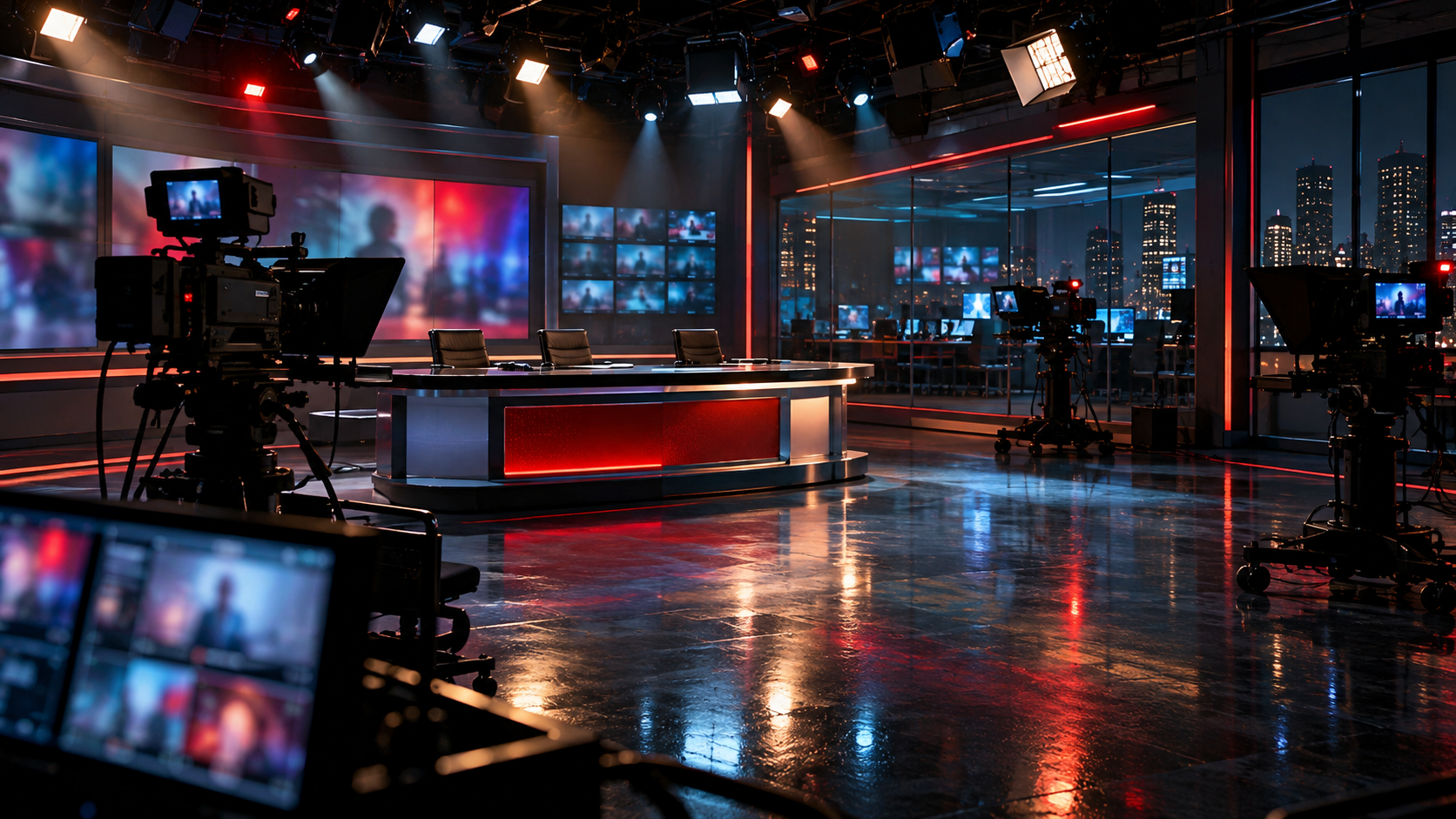
Lance Oppenheim made his name with documentary work before moving into narrative filmmaking. That background makes him an apt director for a film about the way images create a sense of truth. A camera position can suggest authority; control-room monitors can make an event look contained; a brightly lit studio can turn a difficult encounter into a polished performance. By showing the machinery around the broadcast, a film can help the audience think about what is constructed and what remains outside the frame.
Published criticism has described Primetime’s visual style as dark and highly controlled. That look can convey the attraction of the television product: everything appears timed, lit and managed. But a strong visual style needs to deepen the argument rather than simply make the movie look striking. If the audience becomes more interested in the image than in the people affected by the programme, the film risks repeating the same problem it wants to examine. The camera’s point of view is part of the story’s meaning.
The production team and supporting characters
The cast includes Merritt Wever, Skyler Gisondo, Phoebe Bridgers, Matthew Maher and Bokeem Woodbine. A film about television production benefits from an ensemble because no broadcast is shaped by a host alone. Producers, researchers, camera operators, editors, network executives and on-screen talent can have different priorities. One person may want accuracy, another may worry about legal exposure, and another may be judged on whether the episode brings viewers back next week.
Those competing motives make a media story more convincing when the supporting characters have distinct interests. A producer may believe the programme has public value but still want a stronger climax. An employee may question a decision while worrying about their job. A host may sincerely believe in the mission and also enjoy being at the centre of attention. When these positions interact, the story can show how a system influences behaviour without suggesting that all responsibility belongs to one person.
What the critical response highlights
The Guardian’s published review praised the film’s visual identity while questioning the clarity of its moral argument and the way it develops its ethical dilemmas. That response points to a common challenge for media dramas: the movie needs to create tension without reproducing the same simplifications it wants to criticise. If the story is about television turning complex reality into easy entertainment, the film itself needs to be careful about how it guides the audience towards a conclusion.
Some viewers may value the film precisely because it leaves its questions uncomfortable rather than resolving them neatly. Others may want a more developed character arc or a clearer position on the production’s methods. A review score alone cannot communicate those differences. It is more useful to read criticism that identifies whether a reviewer is discussing performance, narrative clarity, the film’s ethical framing or its visual style. Those categories help potential viewers judge whether the criticism matters to their own interests.
Why Primetime feels relevant in a clip-driven culture
People now discover stories through short clips, reaction videos and posts that summarise events in a few seconds. This can make reporting more accessible, but it can also remove context. Primetime’s setting allows the audience to consider how a dramatic television format helped establish some of the habits that remain visible in online media: instant reactions, strong emotional framing and a preference for moments that can be repeated.
Audiences are part of that system too. Viewers reward certain formats with attention, share clips and decide which stories remain visible. That does not make them responsible for every editorial decision, but it means that spectacle depends on demand as well as production. The film can prompt a useful question: when a programme turns a serious public issue into a dramatic event, are viewers thinking about the issue itself, or mainly about the satisfaction of watching a confrontation?
Who should consider watching Primetime?
Primetime may interest viewers who enjoy media-industry dramas, morally complicated characters and stories about the way public images are constructed. It can also appeal to people curious about the history of reality television and the transition from scheduled broadcasts to today’s viral media culture. It is a scripted drama inspired by real media history, not a documentary that catalogues every event or legal issue associated with the original programme.
Because the subject involves serious safeguarding concerns and public exposure, viewers should expect uncomfortable ethical themes. Anyone looking for a light comedy or a neatly resolved mystery may find the tone more challenging. Those interested in media ethics may get more from the film by comparing its dramatic choices with reputable reporting about the real television format and its social effects.
Verdict: an intriguing subject with a difficult ethical balance
Primetime starts with a strong premise: a host wants to make television history, and the film explores the line between public service and public spectacle. Pattinson’s transformation gives it a clear performance focus, while Oppenheim’s documentary background is relevant to a story about cameras and the construction of public narratives. The movie’s most interesting questions concern how ambition, production incentives and audience expectations influence what appears on screen.
Early criticism has raised doubts about the clarity of its argument, so it is best approached as a drama that opens a debate rather than a final guide to the real events. Viewers interested in reality TV, media incentives and public accountability may find it worth considering. For factual context, pair the film with reliable reporting and do not treat every scripted scene as a literal record.
Primetime review: common questions
What is Primetime (2026) about?
It is a scripted drama set in 2006 about a television host preparing a high-profile broadcast inspired by a controversial reality-TV format.
Who stars in Primetime?
Robert Pattinson leads the cast, alongside Merritt Wever, Skyler Gisondo, Phoebe Bridgers, Matthew Maher and Bokeem Woodbine.
Who directed Primetime?
Lance Oppenheim directed the film and Ajon Singh wrote the screenplay, according to the A24 and Venice Film Festival listings.
Is Primetime based on a true story?
It draws on a real media phenomenon but remains a fictionalised drama. It should not be treated as a literal transcript of every private conversation or event.
Does Primetime feature Chris Hansen?
Robert Pattinson portrays a fictionalised version of the television host associated with the real show. Creative interpretation is part of the film.
What themes does Primetime explore?
It explores reality-TV production, ratings, public exposure, moral outrage, journalistic responsibility and the difference between accountability and spectacle.
When did Primetime release?
A24 lists a September 25, 2026 release in the United States. Local release dates can vary.
What have critics said about Primetime?
Some reviews have noted its visual style while questioning parts of its moral argument and narrative clarity. Reviews can differ and new coverage may change the overall picture.
Is Primetime a documentary?
No. It is a scripted film inspired by real media history. Consult established reporting for factual background.
Where can I find the official information?
See the A24 film page and the Venice Film Festival listing.
Sources and further reading
- A24 — official synopsis and credits
- Venice Film Festival — film listing
- The Guardian — published review
- Entertainment Weekly — Pattinson’s preparation